

You likely believe that your endurance is your greatest asset. You have built a life on your ability to carry the load, solve the problem, and be the person others depend on. But there is a specific kind of neglect that you are uniquely susceptible to. It is not the neglect born of laziness. It is the “neglect of self” born of an identity that has become entirely intertwined with what you produce for others.
You have probably convinced yourself that your own needs—your financial foundation, your physical health, and the quiet work of building a base for yourself—can wait. You tell yourself that these things are luxuries you will get to once the current pursuit, project, or goal is delivered or the current crisis is managed. You assume that because you are capable of carrying the weight, you do not need to reinforce the foundation underneath you.
This is the lie you tell yourself: that your endurance is a substitute for a solid base.
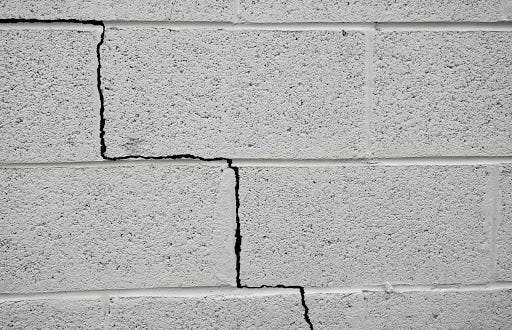
It is not. Endurance will keep you standing for a remarkably long time. But endurance without a foundation eventually breaks. And when it breaks, you realize that the things you thought you could always get back to were actually the things required to sustain the level of success you were trying to achieve. Your “solid base” is not a soft cushion for comfort; it is the underlying strength that allows you to absorb shocks, adapt to change, and sustain peak performance over decades, not just years. It comprises:
•Financial Foundation: Not just income, but accumulated capital that provides optionality and reduces the pressure to make compromised decisions. It is the freedom to say “no” when necessary.
•Physical Health: The energy reserves, mental clarity, and resilience that allow you to engage fully. This is not about vanity; it is about capacity. Chronic sleep deprivation, poor nutrition, and neglected exercise are not badges of honor.
•Mental and Emotional Fortitude: The ability to process stress, maintain perspective, and recover from setbacks without internal collapse. This is built through deliberate practices of reflection, boundary setting, and disengagement from constant external demands.
•Strategic Self-Development: The continuous investment in your own learning, skills, and personal growth, independent of immediate professional requirements. This ensures you remain relevant and adaptable, rather than becoming a relic of past successes.
Consider the high-performer who generates significant income but never builds wealth. They are the primary engine for their family and their business, yet they have no personal safety net. They tell themselves they are being responsible by focusing on the immediate needs of the organization, but they are actually creating a single point of failure. If the engine stops, everything stops.
Or consider the leader who functions on four hours of sleep and a diet of adrenaline. They believe their ability to “power through” is a sign of strength. In reality, they are operating from a place of cognitive scarcity. They are less creative, more reactive, and increasingly prone to the kind of judgment errors that can dismantle years of work in a single afternoon. Their “sacrifice” is actually a slow-motion sabotage of the very mission they claim to serve.
You might think that prioritizing your own long-term stability—financially, physically, and mentally—is selfish. You assume that looking out for yourself means taking something away from the people or the work that depends on you. In reality, failing to build your own foundation is the most dangerous thing you can do to those you serve.
When you do not look out for your own interests in a disciplined way, you eventually become a liability to the very people and things you are trying to protect. You lose the optionality that allows you to lead effectively and adaptively. You burn out, not because the work is too hard, but because the base supporting you is too thin. The “aha” moment is realizing that deprioritizing yourself is not a noble sacrifice; it is the slow-motion sabotage of the very future you are exhausting yourself to build.